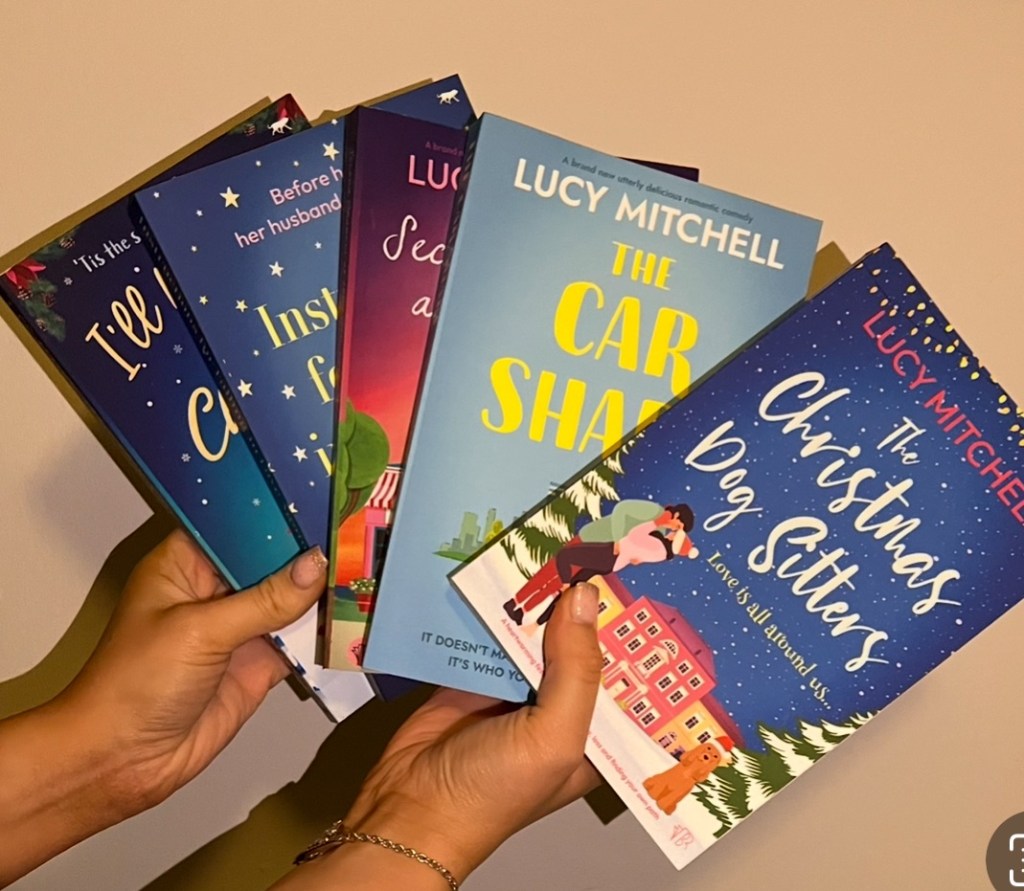
🏃🏻‍♀️How Following Athletes on Social Media Turned Me Into a Motivated Writer #MondayBlogs #writer

Featured

For years, my social media feed has been a stream of writing advice, trending writer quotes and hacks on how to write more words. I have followed countless authors and writing coaches. I have spent hours celebrating their book successes, admiring their book covers, and appreciating their writing practices.

One day over the summer, I found myself spending more time scrolling through their feeds looking for motivation to write, but I wasn’t actually writing.

So, I made an odd decision. I started following professional athletes and filling up my social media feeds with their training vlogs. I still followed the authors, but I shifted my focus.

In my youth, I was a long-distance runner, so watching athletes train for the 800m and 1500m events felt like reconnecting with that younger version of myself. I started following GB athletes like Keely Hodgkinson, Georgia Hunter-Bell, Laura Muir and Jemma Reekie. I also followed American sprinters such as Melissa Jefferson-Wooden and Sydney McLaughlin-Levrone.

I began watching their training vlogs on YouTube and their Insta reels, where they discuss discipline and the mental battles they face. I admired their physical dedication, the way they tracked progress, and their calm acceptance of failure as part of the growth process. I admired them for showing up to train in the pouring rain, the suffocating heat, and the times when they faced personal issues off the track. They persevered through the training despite the challenges.

Soon, something shifted inside me.

Athletes made me view discipline in a new light. Watching athletes train reframed discipline for me. They don’t just “feel like” going to training, they go because that’s who they are. Their discipline isn’t glamorous; it’s about repetition, consistency, and patience, in all weathers. Writing is not glamorous. I write books, and they often feel like marathons. My books require me to show up regularly, not when I feel like it.

Progress became about progress, not about perfection. Athletes celebrate small milestones, such as shaving off a second or two, achieving a better sprint, overcoming the little things in the finish, and improving their running style. I started celebrating the little wins with my writing. It became less about the outcome and more about the process.

The power of training. I have started viewing my writing sessions as my own form of training with adequate periods of rest afterwards. Instead of searching for motivation, I have begun building discipline. Instead of waiting for creativity to strike, I have trained for it.

Writing is a sport of endurance and a test of patience and mental toughness. It’s about showing every day and trusting that repetition makes us stronger.

📔 The Surprising Writing Tool I Didn’t Expect: A Gratitude Journal #mondayblogs #writingcommunity

Featured

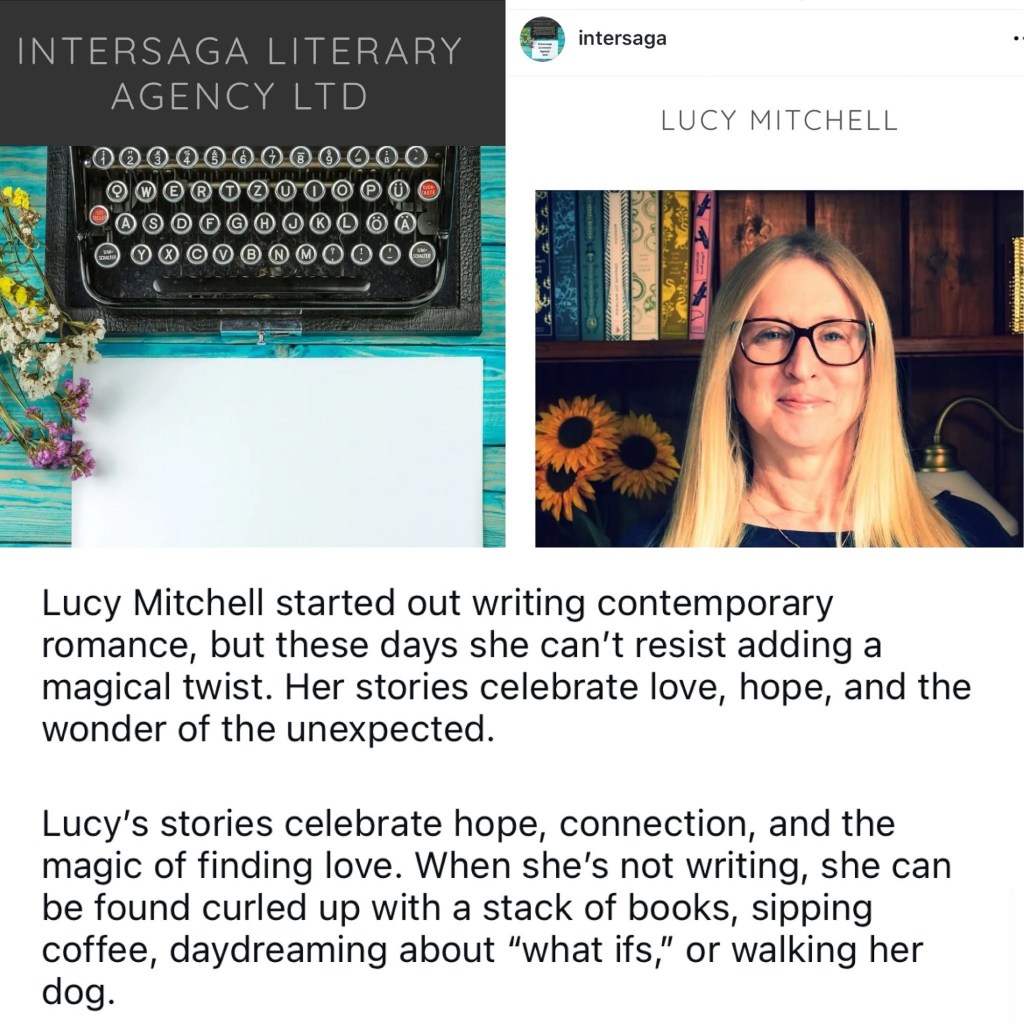
On Friday, I announced on social media that I am represented by Intersaga Literary Agency.

It has taken me a year to find someone who believes in me and my work.

During my year of querying, I wrote a book and rewrote another, queried numerous agents, and received a range of responses, some positive and some not so much.

Through all this, I kept a gratitude journal.

I have never kept a gratitude journal before. I never believed in them, until I heard this phrase, when you start appreciating the good, the good gets better. No idea where it came from but it was linked to a post on gratitude.

I am sitting here, flicking through my gratitude journal, and I think this has been a surprising writing tool for me. I am grateful to it because I believe it kept me sane and kept me focused.

Keeping a gratitude journal shifted my mindset. With my writing I focused on progress and not perfection. Every word written became something to celebrate. I am looking at the page where I drew stars and hearts after giving thanks for 1,567 words.

I even celebrated the rejections. They were medals of honour. I had been brave and taken a risk. Despite being hard to write, I thanked the universe for each rejection, and I thanked the agent too.

If the rejection had been received within twelve hours, I thanked the agent for their promptness in redirecting me.

One agent mentioned that even though she was rejecting me, my query had made her snort with laughter a few times. That, for me, was a small win, and I gave thanks for her honesty.

The big thing was that I thanked myself for showing up when life outside of writing was tough. The act of doing this was powerful. I gave thanks to myself for getting words down on paper when there was a giant hole in my kitchen ceiling and water coming through, when I had an allergic reaction and my face went bright red for days, when I was going through a challenging time at work and when my kids were going through difficult episodes in their lives.

My gratitude journal has become a writing habit and a mindset practice.

Sometimes the best writing tools aren’t the fancy ones we expect – they’re the ones that remind us to notice what’s already working.

Do you keep a gratitude journal?

If you want to learn more about me click here

🚪 5 Things About Using Doors in Your Writing #MondayBlogs #Writers

Featured

I have been reading about how doors can be used as writing devices, and I am obsessed. You’re probably reading this and thinking, Lucy Mitchell needs to get out more…

But…I am not the only one thinking about doors…

A few days ago, I listened to Taylor Swift on the New Heights podcast, and she talked about her dramatic exit through an orange door during the final Eras Tour show, which was no accident—it was what she referred to as one of her carefully placed Easter eggs. Unlike her usual exit via elevator, this one symbolised both an ending and a beginning. I was writing this blog post at the time and suddenly felt Taylor Swift and I were on the same wave length. Sigh!

Useful article on Taylor’s orange door here.

I didn’t realise how doors can be used as powerful symbols.

In my writing, I have never thought about using doors as symbols or tools. In my stories, characters are constantly slamming them shut when they are having a temper tantrum or an emotional outburst. But I have never intentionally used them.

But now after my research I think doors offer us so much more:

Symbols. Doors can have lots of symbolic meanings which we can use in our writing. Symbols can convey things to your reader

  • A closed door can mean opportunity denied or hidden secrets.
  • An open door can suggest freedom, an invitation or vulnerability.
  • They represent a choice or the act of making a decision.
  • Doors can represent escape.
  • An open door can mean hope.
  • Doors can represent barriers that need to be overcome.

Character insights. How a character interacts with a door can show a number of emotions. What doors do they keep shut and does this show avoiding confrontation?

Symbols of Opportunity and New Beginnings. A door opening and entering a new phase and chance for change. Think Alice in Wonderland. Alice stepping through the small door into Wonderland.

Plot catalyst. Doors can move your plot forward. They can be used to act as portals to other worlds, revealing secrets or a forgotten past or trigger events,

Internal reflection. Hesitation at the door can show fear, doubt or anticipation. Forcing the door open can show urgency, desperation or defiance.

Passageway between two worlds. This is probably my favourite. I am a huge fan of The Secret Garden by Frances Hodgson Burnett. In this the door is used as a passageway from isolation to connection. On one side you have Mary’s old, stifled existence and on the other a works full of possibilities and connection. The door is also a passageway between the old world of death and neglect to healing and self discovery.

Doors in Romance and Relationships
Metaphor:
“opening the door to love.” Great way to use physical space to mirror emotional journeys.

The next time your character approaches a door, ask yourself what it means – not just where it leads…..🚪

Learn more about me here.

Door pics from Canva

📝 10 Things That Helped Me Revise My Draft Novel

Featured

On Friday, I finished revising my latest draft novel. I think this novel has added a few more grey hairs and definitely a new wrinkle or two. I have now sent it to someone important (will tell you more in September – high-pitched squeal), and I can start writing my next book, which is desperate to get my attention.

I wanted to document the things that have helped me get through the revision of my draft novel, because it hasn’t been easy and I need some sympathy….

This book was planned out last year, and I wrote a messy short first draft last year. I rewrote it in April and May. So, the revision I have just done is the third draft.

  1. Feedback. I used a professional novel critique service (Elspells), which is one I have used before. There was a cost, but I trust Ellie, and even though her feedback was painful at times, I know she wants to see my draft novel improve and be the best version it can be.
  2. Post Feedback Emotional Breakdown. This was needed. I had to grieve for the old version of my draft novel, and I had to say goodbye to a character and a few storylines. For this, I needed a box of tissues, chocolate and my dog to hug me.
  3. Pocket Notebook. I found that new ideas for my revision didn’t come to me when I was sitting at my desk. They arrived while I was on the train, the bus or in the car. They appeared in the supermarket or shopping for clothes, and at the coffee machine at work. Carrying this notebook around with me has been useful.
  4. Shelved Novels. I have written 12 complete novels, and I have 6 half-finished, shelved novels. Only 5 of the 12 have been published, so I have a lot of characters, plots, and settings that didn’t work the first time but could be extracted and used in this new book. So, I went on a scavenger hunt through my old files.
  5. Junk Journalling. When I wasn’t writing, I was junk journalling, and this has proved useful as it is a great stress reliever for me. I think my brain needs a few creative outlets to work on. There is something magical about sitting down with glue, journal material, stickers, scraps of junk, and a blank journal.
  6. Kitchen dancing. Dancing whilst revising is a must. The kitchen at night became my dance floor, and let me tell you – I got creative with my arms and legs! A clap combined with a high leg kick is good for writer’s block. Just be careful you have no hot pans on the stove.
  7. Painful changes first. I worked on the painful modifications first. It was tough.
  8. Spreadsheet. I set up a revision spreadsheet, listed all my changes and ticked them off as I went.
  9. Red lipstick. I wore red lipstick as I made the big changes, like removing characters. It’s a power move.
  10. Read a different genre. I switched to non-fiction books while I was revising. I find that if you read the same genre you will find the book you are reading appearing on the page.

Revising your draft novel is tough, and it is a long, dark tunnel but you must keep moving.

Never lose hope and keep writing.

Learn more about me here

💔 10 Things Not To Say To A Romance Author Writing a Breakup

Featured

I am currently crafting the emotional wrecking ball part of my draft romance novel – the breakup 💔

It’s a tense and my emotions are all over the place.

This is not the time for witty comments from loved ones who have never written or read a romance novel in their life.

Here are some things not to say to a romance author writing a breakup:

  1. Can’t you just let them stay friends?”
  2. Didn’t you write a break-up in your last book?”
  3. Can’t they break up via text?”
  4. Didn’t they just get together two chapters ago?”
  5. Is he based on me?”
  6. is this based on us?”
  7. You seem really into this – should I be worried?”
  8. Why are you crying over something that is made up?”
  9. “I thought romance books were supposed to be fun?
  10. You know it is not real – don’t you?”

I am going to carry on writing the heartbreak 💔

Learn more about me

📚 10 Lessons I Learnt With 5 Published Books

Featured

Back in 2017, I decided to write my first full-length romance novel. Before this, I had written a dodgy space rom-com and a romance series, which was written via thirty-four weekly blog posts, called The Diary of Roxy Collins. One day I must turn her into a book.

The thought of being published back then felt like a pipe dream. It was something that happened to other people, not to someone like me.

After much daydreaming and procrastination, I had to set aside the dream of being published and focus on learning how to write a romance novel. This book would become “Instructions for Falling in Love Again.”

My first book was published in 2023 with Bloodhound books.

Here I am today, with five published books behind me, and I am ready to share the lessons I have learnt.

  1. Every book teaches you something different. It could be plot, character, setting or something about yourself. Book ideas don’t always come to you because they are meant to be turned into books. Most ideas come to teach you something.
  2. Every book will break you in some way. It’s true. They will either break you emotionally or mentally. At some point you will want to lie down by your desk, curl up in a ball and weep. Every book of mine has done this to me. Some break me at first draft stage, some second draft however most break me when I have to make harsh changes like deleting characters, large chunks of my plot and my book no longer feels like the one I first wrote.
  3. Editors are wonderful people. They are the unsung heroes of the book world,
  4. A book is never finished. I still think about my 5 books and what I would do to improve them.
  5. Promoting books never gets easier. To be an author you have to find new ways of promoting your book and you will have to be okay when your carefully crafted social media posts don’t perform.
  6. Reading is your rocket fuel. If you can’t write – read!
  7. Writer’s block is more likely to be due to tiredness/exhaustion/stress/burnout. Always try resting or taking a break first before you try and alleviate your writer’s block.
  8. Honest beta readers are invaluable. If you can find honest beta readers you are onto something good.
  9. Rejection never goes away. This is true. Rejection still happens even when you are an established author.
  10. Conflict. It’s all about the conflict. This is the secret sauce for any book. If you want to write a good book – add a good spoonful of conflict,

And I still feel like a beginner when it comes to writing a book 🤣

Learn more about me here

📝 10 Things Not to Say to a Writer When They’re Editing

Featured

Editing – that magical time when a writer transforms their messy, overcaffeinated draft into something extraordinary.

It is not for the faint-hearted. A writer will journey to hell and back during a book edit.

Please treat your writer with care as they are performing a miracle and don’t say any of the below. I have added my thoughts alongside each one.

  • “You’re still working on that book?” – if you want to be really annoying place emphasis on the word ‘still’ and combine this with a look of concern.
  • “How long can it take to fix a few typos?” – the person who says this knows nothing about editing and deserves to have a cushion thrown at them.
  • “Didn’t you already write this?” – this deserves another cushion to be chucked in their direction.
  • “Can I read it?” – definitely not!
  • “It can’t be that bad.” – For top tier annoyance – follow this up with – “When I eventually write my book I will get it right first time.” Make sure you have been threatening to write a book for years but never got round to doing it.
  • “You don’t need to do all this editing. You’re being dramatic.” One of my favs. Usually spoken by someone who knows 0 about writing / editing.
  • “Tell me again what your book is about? – No!
  • “Why don’t you just write one draft?” – because we like to cause ourselves pain!
  • Just make it up.’ No comment.
  • “I thought you said you would take three months to write and edit it?” The only response to this is to laugh hysterically.

Editing is hard and it requires a different skill to writing. You also need to be tough enough to delete the bits you think are good which are usually naff.

Be nice to your writer during their editing stage.

Learn more about me here

📚 The Lies I Am Telling Myself About My Recent Notebook Purchases

Featured

My lifelong notebook addiction is over, readers (Lie 1 🤣). I thought I’d pop in here and tell you that I won’t be buying any new notebooks from now on (Lie 2).

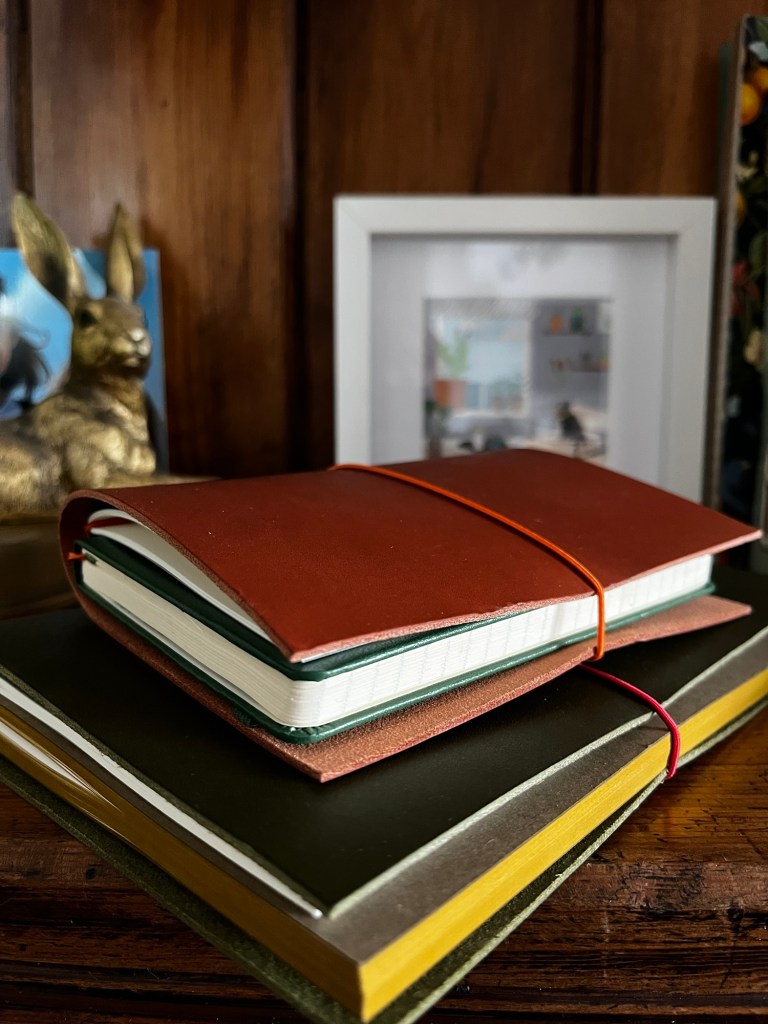
I have purchased two new leather notebooks. One pocket-sized, which can go in my handbag, and one A5-sized, which will be my writing notebook. As these notebooks contain refills and they also allow me to insert other refills, I won’t need to buy any new notebooks.

Ignore my judgy Harris – the brass hare, in the photo. Harris knows nothing about my notebook addiction.

These notebooks whispered to me, ‘You’re the kind of woman who writes important thoughts.’

With these beautiful notebooks I won’t have that worry about spoiling them. I mean, I have had them a week or so, and both are still empty, but the ideas will soon start flooding, and they will be well used in no time (Lie 3).

I don’t need lots of notebooks in life. I can work on 2 maximum. (Lie 4).

Up until now buying a new notebook has been my go-to response at the sign of a life problem. Whenever my life has chucked a curve ball at me I will pop out and buy a notebook, These new notebooks will stop this. (Lie 5)

Big ideas are coming, readers. My new notebooks and I are ready for them.

I can’t wait to update you all on….my failed attempts at not buying anymore new notebooks 🤣

Harris the brass hare needs to stop giving me judgy looks as I sit here and stroke my new notebooks.

Learn more about me

😳 Sliding Door Moments: How To Nail Alternate Reality Plots

Featured

Have you ever wondered what would have happened if… You had turned down that job, stayed with that love interest, gone travelling instead of going to university, or taken a different life path?

Would you love to glimpse at what I refer to as the road not taken?

I am reflecting on the crossroads in my life and the roads I didn’t take;

What would have happened if, at seventeen, I had stayed with the handsome lifeguard who was great to look at but didn’t talk much? When he did talk (not that often) it was one maybe two word type answers. I couldn’t cope with the lengthy silences…

What would have happened if I had not gone to university and remained a till girl in the teenage clothing department of C&A?

What would have happened if I had self published my first ever novel – a space romcom which defied the laws of science but was like – Bridget Jones in space – and I had become famous because of it? Plus the famous scene where they are doing saucy things whilst passing by the rings of Saturn would be like a legendary film clip.

My mind is boggling.

There are lots of good examples of alternate reality stories. In one of my favourite books, The Midnight Library by Matt Haig, Nora steps into a library filled with books representing different versions of her life. She gets to glimpse at the roads she didn’t take in life. In the film Sliding Doors, Gwyneth Paltrow’s character misses or catches a train, leading to two different life outcomes.

I love how small moments can have a profound impact on your life; the text message you didn’t send, the bus or train you missed, the party invite you declined or the notebook you didn’t buy – the one which you would have taken to a writer conference and as you proudly waved it about you would have caught the eye of someone significant (my notebook addiction coming through here – sorry).

Can you imagine being able to see what would have happened if you had got on the bus or gone to the party?

Why do we love these types of stories? I suppose they tap into deeper emotions, such as regret and curiosity, and they make us ask whether there is such a thing as destiny? Or is everything down to chance?

Here are some things to consider when writing stories where the character gets to see an alternate reality:

  • What lesson is the alternate reality TEACHING your character? It’s not about how things could have been; it is about what the character needed to LEARN.
  • Think about why your story needs alternate realities. It is a tool and it must be used to explore a character’s inner journey. It’s not just a gimmick.
  • Think about what your character will think by the end? How has it changed them?
  • Don’t go alternate reality crazy. Limit the number.

Good Luck

Learn more about me..

🔮 Speculative Concepts and Themes

Featured

I am obsessed with writing romance with a speculative twist. They are so much fun and a joy to write.

I have compiled a list of speculative concepts and themes that might be helpful for other writers considering similar projects. They may also prompt you to think of books you have read that incorporate these concepts or simply spark your imagination.

I only have to read the list below, and my fingers start to itch.

Time and Memory

  • Time loops. This is where a character relives the same day, date or event until emotional growth occurs.
  • Selective Memory Loss. This is where a character forgets a person, relationship, or a single emotion.
  • Memory sharing/transfer. This is where a character can touch an object/person and that lets them access someone else’s memories.
  • Reliving alternate outcomes. This is where you explore “what ifs” from past decisions.
  • Borrowed time. This is where a character is loaned moments from another’s life or timeline.

Parallel Lives and Multiverse

  • Split reality decisions. This is where you explore different reality outcomes. What would have happened if I had stayed or left?
  • Finding a portal to a version of life. This is where you find a portal to a life you have lived differently.

Magical Realism and Objects

  • Mirrors, clocks that replay parts of life.
  • Locked boxes or letters that open at the right point in life.
  • App generared relationships that change something about reality.

Romance Spec Themes

  • Second chance romance under impossible conditions
  • Chosen love versus destined love
  • Emotional amnesia and rediscovery
  • The love that waited.
  • Can you fall in love the same way twice?
  • Undoing a mistake

I have no idea where this era will take me. All I do know that I can only write what I enjoy and what excites me.

Learn more about me here