💖 🚗 Writing the Perfect Commuter Romance: Turning Commuting into Love #mondayblogs

Featured

We’ve all been there — sitting on a train, bus, or on a busy tube, earbuds in, coffee in hand, watching two people exchange nervous smiles. Perhaps one tries to make interesting small talk or the other drops the book they’re reading, and they both reach down to pick it up. The romance author in me always wonders whether this is the start of a train, bus or tube love.

If you’ve ever wanted to write a romance that unfolds between the morning rush and the evening ride home, here’s how to make it work.


1. Make the Commute a Character

The setting is half the appeal of commuter romance. Whether your story takes place on a bustling city underground, a sleepy small-town bus or in the back of a pink mini, let the environment shape the story.

  • Use the sensory details — the hum of the tracks, the press of strangers, the smell of rain on pavement.
  • Let the commute set the rhythm — mornings can be hectic and filled with near-misses, while evening rides might be quieter, more reflective, and intimate.
  • Include the small rituals — favorite seats, missed connections, waiting for the right bus. These little moments can become emotional touchpoints for your characters.

2. Create Organic Encounters

The magic of commuter romance is that it feels like fate brought two people together. Avoid forced meet-cutes — instead, lean into the natural patterns of commuting:

  • Glances across the aisle that turn into smiles.
  • Shared frustrations when the train is delayed or the bus is too full.
  • Brief interactions that build over time — lending a pen, sharing an umbrella, swapping book recommendations.

This slow-burn format works beautifully because readers are invested in watching the relationship unfold in small, believable increments.


3. Play with Tension and Timing

A commute is inherently time-bound. Your characters only have a few minutes (or an hour at most) to interact before one of them gets off. Use this built-in constraint to your advantage:

  • Cliffhangers: One character is about to confess something… and then their stop comes.
  • Near-misses: One day, they don’t show up, and the other character has to grapple with how much that absence hurts.
  • Countdowns: Maybe one of them is moving to another city soon, giving their romance an urgent ticking clock.

This makes every interaction count — and keeps readers turning the pages.


4. Explore the Themes of Movement

Commuter romance isn’t just about getting from point A to point B. It’s about transformation.

  • The journey mirrors the character’s emotional growth.
  • The daily routine becomes a metaphor for breaking out of a rut.
  • Love literally takes them somewhere new.

Whether your characters are finding love while stuck in traffic or riding a high-speed train, their emotional arcs should mirror the motion of the world around them.


5. Don’t Forget the Destination

Eventually, your characters have to leave the train (literally or figuratively). A satisfying commuter romance shows what happens when their relationship steps off the platform and enters real life.

Do they keep seeing each other outside of the commute? Do they decide to make a big change — move, switch jobs, take a leap of faith? Your ending should feel like a reward for all those quiet moments spent sitting side by side.

Here’s my commuter romance: The Car Share

The Car Share

Embark on a heartwarming journey in this romantic comedy that proves it doesn’t matter where you’re going—it’s who you have beside you on the way . . .

After Lia’s old car breathes its last, the single mom must reluctantly take the bus to work . . . and face unwarranted attention from a troublesome teenager. It’s all too much to take—she’s been depressed since her fiancé’s death and even quit her beloved women’s football team. But it’s Happy Car Sharers to the rescue after her friends get her set up on the app.


Mateo, meanwhile, has recently moved to town, and his long walk to the train station is a literal pain due to an ankle injury. Soon he and Lia are riding each morning with a charmingly bossy driver and a rotation of colorful fellow passengers.


It’s not love at first sight. Technically it’s not even first sight: they’ve seen each other before at the nursing home where both their fathers live and Mateo plays piano for the residents. But with each trip they get to know each other better . . . and the more they know, the more they find to like.


With both of them consumed by personal losses and pressing family responsibilities—and another man getting in the way—can romance lie on the road ahead for these commuting companions?

The Car Share is a humorous exploration of love, loss, and the unexpected detours that lead us to where we truly belong.

⏰ Groundhog Day But Better: How to Craft Time Loops In Your Fiction

Featured

I am a fan of books and films where characters get stuck in a time loop and are forced to relive the same moments.

My love of time loops probably stems from watching the movie Groundhog Day. I can still remember sitting on the sofa, shovelling popcorn into my mouth and watching that 1993 comedy with Bill Murray and Andie MacDowell. It is a story of a man, Phil Connors, who lives the same day over and over again. Initially, he is a cynical and selfish weatherman, but by the end, after reliving the same day repeatedly, he begins to help and connect with others.

I love time loop stories because the characters get to learn from past mistakes, see the consequences of actions and immediately put that knowledge to good use.

Over the years I have read some great time loop stories:

  • The First Fifteen Lives of Harry August. Every time Harry dies, he’s reborn into the same life.
  • Before I Fall by Lauren Oliver. The character relives the day of her death over and over again until she can rewrite her legacy.
  • The Opposite of Always by Justin A. Reynolds. The character keeps reliving the moment his girlfriend dies.
  • In a Holidaze by Christina Lauren.
    Her character is stuck reliving the same Christmas holiday until she figures out what (and who) she really wants.

As I am in my speculative writing era, here are some things to think about if you are writing a time loop:

  • Time loops are not gimmicks. They are clever tools for character transformation. It took me a while to see this, but it is true. The time loop forces a character to change. The character isn’t in charge of the time loop and this is what makes it cool. The only control they have is their reaction to the loops and doing unpredictable things to find a way of breaking it. You need to think about what sort of transformation you want your character to have. Is the time loop a tool for helping your character process grief? Facing an emotional truth? Or fixing a broken relationship? Think about Groundhog Day and the transformation Phil Connors goes through.
  • Make the repetition feel fresh. There is a real danger with time loops that readers will get bored of the repeated moments. Don’t replay full scenes unless something significant changes.
  • Make your character relatable and interesting. The reader is going to go through a lot for this character.
  • The stages of your character accepting they are in a time loop and getting out of it. 1. repetition / confusion. 2. Fun experimentation. 3. Frustration. 4. A new hope. 5. Resolution.
  • Rules of the time loop are key. You need to establish these early on: when does the loop get reset (examples might include death, midnight, or a specific decision)? Who remembers the time loop? Is it just the main character, or are there others who also remember it?
  • It’s all about the exit strategy. How does your character break the loop? This is so important. To break the loop do they need to have learned something about themselves? Have they decided to change themselves? Or have they decided to forgive? This goes back to the purpose of the time loop and the transformation it is giving to your character.

As a romance author here’s some of my thoughts on how we can use time loops:

  • ❤️ Exploring -The One That Got Away.’ Fate gives your characters a second chance at a break up they never got over or a confession they need to have made. Love this!
  • 💔 To let someone go. Think lost love or processing grief, perhaps. Yes please and I will bring my box of tissues.
  • 🔥 Forced proximity. Trapped with your ex in a time loop – yikes! This has great potential and the stakes are high if enemies to lovers.
  • 🙈 Choosing the wrong person. The time loop forces them to see the error of their ways. Yes, yes, yes!

Enjoy writing your time loops.

Learn more about me here

🔮 Speculative Concepts and Themes

Featured

I am obsessed with writing romance with a speculative twist. They are so much fun and a joy to write.

I have compiled a list of speculative concepts and themes that might be helpful for other writers considering similar projects. They may also prompt you to think of books you have read that incorporate these concepts or simply spark your imagination.

I only have to read the list below, and my fingers start to itch.

Time and Memory

  • Time loops. This is where a character relives the same day, date or event until emotional growth occurs.
  • Selective Memory Loss. This is where a character forgets a person, relationship, or a single emotion.
  • Memory sharing/transfer. This is where a character can touch an object/person and that lets them access someone else’s memories.
  • Reliving alternate outcomes. This is where you explore “what ifs” from past decisions.
  • Borrowed time. This is where a character is loaned moments from another’s life or timeline.

Parallel Lives and Multiverse

  • Split reality decisions. This is where you explore different reality outcomes. What would have happened if I had stayed or left?
  • Finding a portal to a version of life. This is where you find a portal to a life you have lived differently.

Magical Realism and Objects

  • Mirrors, clocks that replay parts of life.
  • Locked boxes or letters that open at the right point in life.
  • App generared relationships that change something about reality.

Romance Spec Themes

  • Second chance romance under impossible conditions
  • Chosen love versus destined love
  • Emotional amnesia and rediscovery
  • The love that waited.
  • Can you fall in love the same way twice?
  • Undoing a mistake

I have no idea where this era will take me. All I do know that I can only write what I enjoy and what excites me.

Learn more about me here

💖 Love, Lost and Found: Mastering the Second Chance Romance Plot

This blog post is going to help my writer brain focus on one of my current projects. I do hope someone else out there writing a second chance romance finds it useful.

Second chance romance is one of my favourite romance tropes. I could read these stories all day.

One of my current projects focuses on a second chance romance so I could really do with going back to basics with the trope in order to revise my story.

Below I have come up with a list of all the things to consider when writing a second chance romance.

How did they initially connect?

Were they childhood sweethearts? Maybe they met at work?

The secret here is readers need to see and feel how good that connection was between these two beautiful characters. This breathtaking romance has to be unforgettable for both readers and the characters.

Why did they split up? What made them walk away from each other? Were they too young? Was it a case of bad timing or did one hurt the other? What broke them?

Readers need to understand what made these characters go blubber into a box of Kleenex, wedge chocolate into their mouth and go for long solitary walks in the rain.

What personal growth have they experienced? What has life taught them in the years they were apart? What did other relationships teach them? Have they thought about why they have never connected with anyone on the same romantic level as they did with each other?

What made them want to give their relationship another chance? Why can’t they disentangle from each other’s lives? What has made them come together again? Why salvage a broken relationship?

The reader must understand and agree with these decisions. There must also be that old connection and the chemistry.

What stuff have they overcome? Have they resolved the old conflict? Readers need to see how these two characters might have had different priorities that caused their breakup. But now that those priorities have changed, so, maybe there is still a chance for them to work it out. It could also be a case of these two characters making mistakes and generally causing an emotional mess.

The reader needs to believe these two have changed for the better.

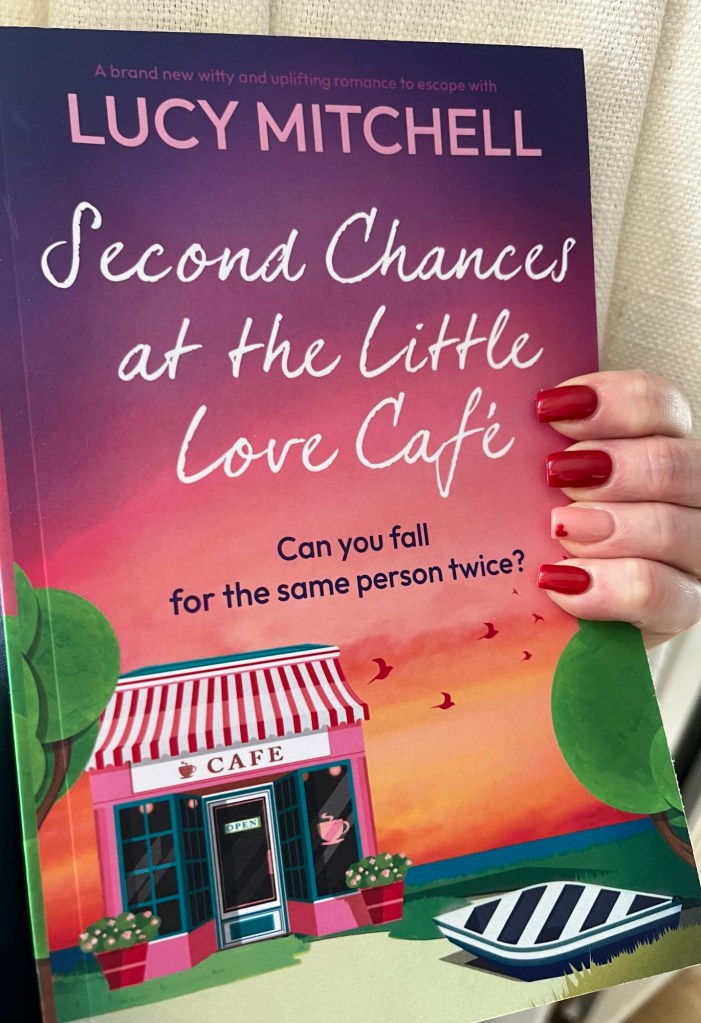
Here’s my second chance romance which got published:

Second chances at the Little Love Cafe

It’s never too late to try again… 💕

‘Must read summer book’ ⭐️⭐️⭐️⭐️⭐️

‘A fantastic uplifting read that takes you direct to the cute Little Love Cafe.’ ⭐️⭐️⭐️⭐️⭐️

Click here for more