📚 How To Survive Comparing Your Unfinished Draft Novel to a Successful Author’s Bestseller #MondayBlogs

Featured

Here are the stages of comparing your unfinished draft to a successful author’s bestselling novel:

Reading euphoria. Your favourite author’s latest book is hard to put down. You haven’t surfaced for food, drink, or some basic form of interaction with another human being for most of the day.  Their book is AMAZING.

As you reach a juicy bit in the book, you get a rush of what can only be described as reading euphoria.

Panic. During this intense spell, you become aware of a helpful little voice inside you saying, ‘You couldn’t write anything like this’.

You start to think about what the little voice said. You place the book in your lap as a dark cloud of writer’s doubt passes over you.

In a panic, you glance at the pile of papers making up your unfinished draft novel. It’s taken you months to reach this stage, and the project is not even finished. Up until you read this book, you thought your draft novel was pretty awesome.

Comparison Hell. You enter what can only be described as a form of writer comparison hell.

Your mind starts to unpick your draft whilst replaying the amazing bits of the book that you are reading back to you.

The helpful little voice returns and gives a handy running commentary on:

– how your draft does not have this author’s engaging tone

– your draft does not contain the plot twists that this author’s book possesses

– your draft does not have the amazing characters which bring this author’s book to life.

You reach out for a box of tissues. All those loving feelings for your draft novel are washed away with your tears.

Gigantic cloud of self-doubt. After some careful consideration, you decide that the best thing all round will be for you to…quit writing. You could never come up with something as good as this book.

There is no hope for you so why put yourself through anymore misery?  

The literary dream is over.

STOP!

Your successful author’s book has been through NUMEROUS revisions. It will have been changed, edited and rewritten a LOT before it hit the shelves. It has been polished so much, the damn thing shines!

Your draft hasn’t, and more importantly, it’s still not finished.

Your draft is still at the ‘ugly duckling’ phase. All draft novels go through this stage.

Your successful author’s book even went through the unfinished draft stage and probably looked nothing like what it does today.

Behind every great book on sale are hours, days, months and in some cases years of hard work.

So, how do you learn to survive this?

  • Make notes on what made their book so good. Use this insight to feed into your own work.
  • Read book acknowledgments more. This is where an author documents their struggle, pain and journey to publication. If you read these you will see that the journey to a published bestselling novel is long and arduous.
  • Take out an old project you wrote a few years ago and compare your current draft. Look at how far you have progressed. This is the comparison we should all be doing.

Keep writing and finish your book!
🦋 What Taylor Swift Can Teach Writers About Symbolism

Featured

Help – I have fallen down the rabbit hole of symbolism in writing! Last week’s post on the symbolism of doors sparked something within me.

I wouldn’t say I was a Swiftie with regards Taylor Smith but I do have an appreciation of her music especially her albums; Midnights and The Tortured Poets Department. Both of these albums contain songs which are forever playing on my playlists.

I do think Taylor Swift is more than a singer / songwriter. To me she’s a master storyteller. The way she uses objects, colors, numbers, and repeating motifs to make her songs come alive, boggles my fiction writing mind.

When it comes to symbolism I think we can learn a lot from Taylor Swift:

Signature symbol. I love how the number 13 follows her across her albums, eras and performances. The number 13 needed Taylor Swift to take it under her wing as up until she came along it didn’t have great street cred. What can we learn from this? Give your protagonist or story a recurring object, number, or phrase that becomes uniquely tied to them. This could be a piece of jewelry, a meaningful song lyric, or even a personal superstition that appears at key moments.

Use of colours. I love how each album has a distinct colour palette and there is always meaning behind it. Her album, Lover, is bathed in a soft pastel pink which represents love and warmth. Grey and neutrals for her album, Folklore, to me were about nostalgia and Midnights was dark blue and lavender signifying introspection and mystery.

Small objects carry big meaning. This is my favourite part. Taylor does this very well. She gives small object so much emotional weight. Here are a few examples:

A scarf becomes a symbol of love and loss (All too well).

mirrorball represents fragility and self-reflection (Mirrorball).

cardigan is comfort and memory wrapped in one (Cardigan).

What can we use from this? Pick one or two objects in your story and let them evolve with your characters. Maybe a chipped mug follows your character from their old life into their new one, symbolizing what they carry with them.

Symbolism turns Taylor’s songs into things that linger in your mind long after they have stopped playing. It gives her songs a narrative emotional texture — that extra layer that makes listeners pause and say, “Ohhh, I get it.”

We can learn from her.

Things I am learning from Taylor Swift:

Choose one object, one color, and one repeated idea.

Plant them early in my story.

Letting them grow in meaning as my characters change.

I can’t leave this post without giving you my top 5 Taylor Swift songs:

  1. Mastermind (Midnights)
  2. So, Long London (TTPD)
  3. Look what you made me do (Reputation)
  4. My tears ricochet (Folklore)
  5. The Prophecy (TTPD)

Would love to hear your thoughts and your top 5 Taylor Swift songs 🦋

🎤 ❤️

If you want to know more about me click here

🚪 5 Things About Using Doors in Your Writing #MondayBlogs #Writers

Featured

I have been reading about how doors can be used as writing devices, and I am obsessed. You’re probably reading this and thinking, Lucy Mitchell needs to get out more…

But…I am not the only one thinking about doors…

A few days ago, I listened to Taylor Swift on the New Heights podcast, and she talked about her dramatic exit through an orange door during the final Eras Tour show, which was no accident—it was what she referred to as one of her carefully placed Easter eggs. Unlike her usual exit via elevator, this one symbolised both an ending and a beginning. I was writing this blog post at the time and suddenly felt Taylor Swift and I were on the same wave length. Sigh!

Useful article on Taylor’s orange door here.

I didn’t realise how doors can be used as powerful symbols.

In my writing, I have never thought about using doors as symbols or tools. In my stories, characters are constantly slamming them shut when they are having a temper tantrum or an emotional outburst. But I have never intentionally used them.

But now after my research I think doors offer us so much more:

Symbols. Doors can have lots of symbolic meanings which we can use in our writing. Symbols can convey things to your reader

  • A closed door can mean opportunity denied or hidden secrets.
  • An open door can suggest freedom, an invitation or vulnerability.
  • They represent a choice or the act of making a decision.
  • Doors can represent escape.
  • An open door can mean hope.
  • Doors can represent barriers that need to be overcome.

Character insights. How a character interacts with a door can show a number of emotions. What doors do they keep shut and does this show avoiding confrontation?

Symbols of Opportunity and New Beginnings. A door opening and entering a new phase and chance for change. Think Alice in Wonderland. Alice stepping through the small door into Wonderland.

Plot catalyst. Doors can move your plot forward. They can be used to act as portals to other worlds, revealing secrets or a forgotten past or trigger events,

Internal reflection. Hesitation at the door can show fear, doubt or anticipation. Forcing the door open can show urgency, desperation or defiance.

Passageway between two worlds. This is probably my favourite. I am a huge fan of The Secret Garden by Frances Hodgson Burnett. In this the door is used as a passageway from isolation to connection. On one side you have Mary’s old, stifled existence and on the other a works full of possibilities and connection. The door is also a passageway between the old world of death and neglect to healing and self discovery.

Doors in Romance and Relationships
Metaphor:
“opening the door to love.” Great way to use physical space to mirror emotional journeys.

The next time your character approaches a door, ask yourself what it means – not just where it leads…..🚪

Learn more about me here.

Door pics from Canva

💔 10 Things Not To Say To A Romance Author Writing a Breakup

Featured

I am currently crafting the emotional wrecking ball part of my draft romance novel – the breakup 💔

It’s a tense and my emotions are all over the place.

This is not the time for witty comments from loved ones who have never written or read a romance novel in their life.

Here are some things not to say to a romance author writing a breakup:

  1. Can’t you just let them stay friends?”
  2. Didn’t you write a break-up in your last book?”
  3. Can’t they break up via text?”
  4. Didn’t they just get together two chapters ago?”
  5. Is he based on me?”
  6. is this based on us?”
  7. You seem really into this – should I be worried?”
  8. Why are you crying over something that is made up?”
  9. “I thought romance books were supposed to be fun?
  10. You know it is not real – don’t you?”

I am going to carry on writing the heartbreak 💔

Learn more about me

😳 Sliding Door Moments: How To Nail Alternate Reality Plots

Featured

Have you ever wondered what would have happened if… You had turned down that job, stayed with that love interest, gone travelling instead of going to university, or taken a different life path?

Would you love to glimpse at what I refer to as the road not taken?

I am reflecting on the crossroads in my life and the roads I didn’t take;

What would have happened if, at seventeen, I had stayed with the handsome lifeguard who was great to look at but didn’t talk much? When he did talk (not that often) it was one maybe two word type answers. I couldn’t cope with the lengthy silences…

What would have happened if I had not gone to university and remained a till girl in the teenage clothing department of C&A?

What would have happened if I had self published my first ever novel – a space romcom which defied the laws of science but was like – Bridget Jones in space – and I had become famous because of it? Plus the famous scene where they are doing saucy things whilst passing by the rings of Saturn would be like a legendary film clip.

My mind is boggling.

There are lots of good examples of alternate reality stories. In one of my favourite books, The Midnight Library by Matt Haig, Nora steps into a library filled with books representing different versions of her life. She gets to glimpse at the roads she didn’t take in life. In the film Sliding Doors, Gwyneth Paltrow’s character misses or catches a train, leading to two different life outcomes.

I love how small moments can have a profound impact on your life; the text message you didn’t send, the bus or train you missed, the party invite you declined or the notebook you didn’t buy – the one which you would have taken to a writer conference and as you proudly waved it about you would have caught the eye of someone significant (my notebook addiction coming through here – sorry).

Can you imagine being able to see what would have happened if you had got on the bus or gone to the party?

Why do we love these types of stories? I suppose they tap into deeper emotions, such as regret and curiosity, and they make us ask whether there is such a thing as destiny? Or is everything down to chance?

Here are some things to consider when writing stories where the character gets to see an alternate reality:

  • What lesson is the alternate reality TEACHING your character? It’s not about how things could have been; it is about what the character needed to LEARN.
  • Think about why your story needs alternate realities. It is a tool and it must be used to explore a character’s inner journey. It’s not just a gimmick.
  • Think about what your character will think by the end? How has it changed them?
  • Don’t go alternate reality crazy. Limit the number.

Good Luck

Learn more about me..

💖 Love, Lost and Found: Mastering the Second Chance Romance Plot

This blog post is going to help my writer brain focus on one of my current projects. I do hope someone else out there writing a second chance romance finds it useful.

Second chance romance is one of my favourite romance tropes. I could read these stories all day.

One of my current projects focuses on a second chance romance so I could really do with going back to basics with the trope in order to revise my story.

Below I have come up with a list of all the things to consider when writing a second chance romance.

How did they initially connect?

Were they childhood sweethearts? Maybe they met at work?

The secret here is readers need to see and feel how good that connection was between these two beautiful characters. This breathtaking romance has to be unforgettable for both readers and the characters.

Why did they split up? What made them walk away from each other? Were they too young? Was it a case of bad timing or did one hurt the other? What broke them?

Readers need to understand what made these characters go blubber into a box of Kleenex, wedge chocolate into their mouth and go for long solitary walks in the rain.

What personal growth have they experienced? What has life taught them in the years they were apart? What did other relationships teach them? Have they thought about why they have never connected with anyone on the same romantic level as they did with each other?

What made them want to give their relationship another chance? Why can’t they disentangle from each other’s lives? What has made them come together again? Why salvage a broken relationship?

The reader must understand and agree with these decisions. There must also be that old connection and the chemistry.

What stuff have they overcome? Have they resolved the old conflict? Readers need to see how these two characters might have had different priorities that caused their breakup. But now that those priorities have changed, so, maybe there is still a chance for them to work it out. It could also be a case of these two characters making mistakes and generally causing an emotional mess.

The reader needs to believe these two have changed for the better.

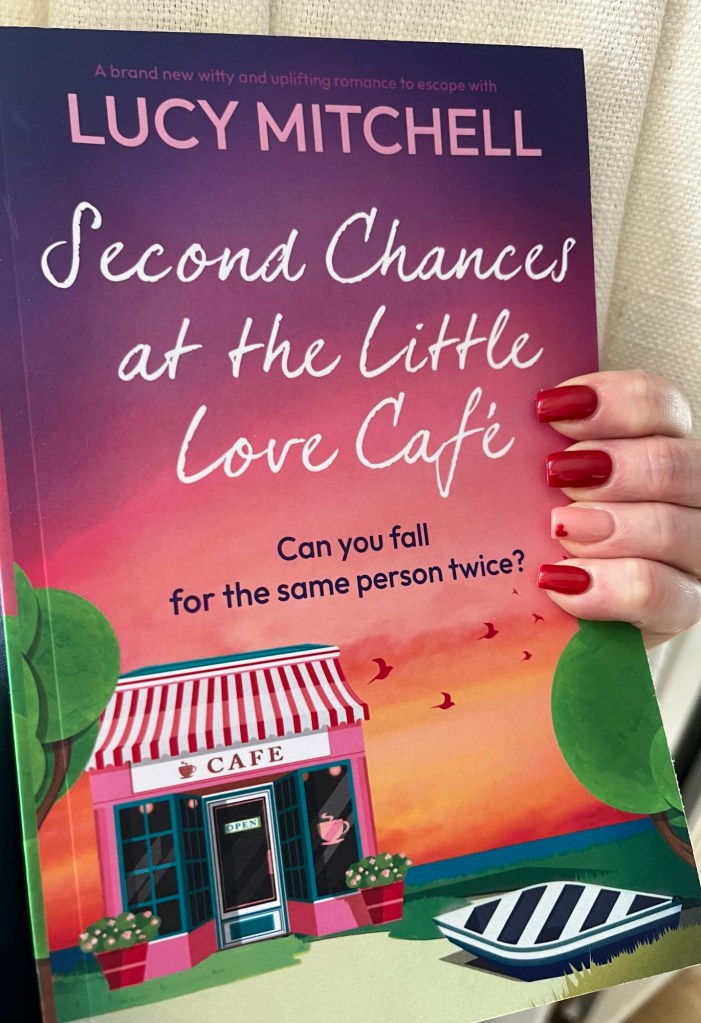
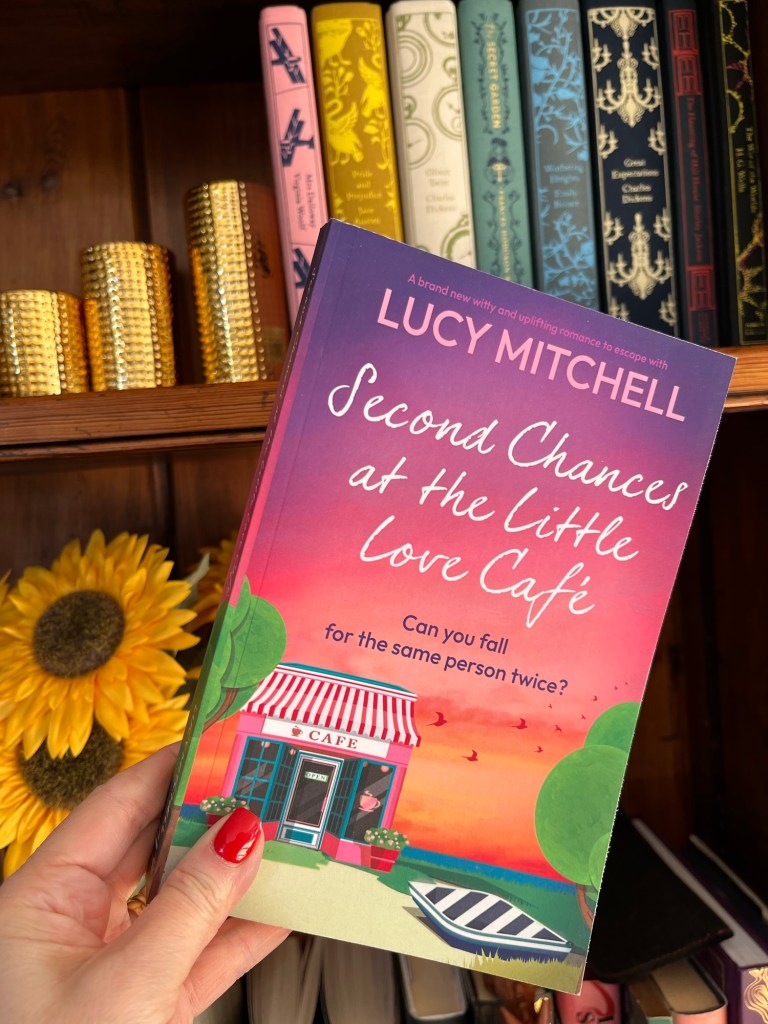
Here’s my second chance romance which got published:

Second chances at the Little Love Cafe

It’s never too late to try again… 💕

‘Must read summer book’ ⭐️⭐️⭐️⭐️⭐️

‘A fantastic uplifting read that takes you direct to the cute Little Love Cafe.’ ⭐️⭐️⭐️⭐️⭐️

Click here for more